If you lift, run, or simply try to hit a daily protein target while sharing a kitchen with people who prefer baked goods to chicken breasts, banana bread can be a quiet ally. The classic loaf is comforting, portable, and forgiving. It is not, however, known for protein. Most versions lean hard on sugar and refined flour. That’s fine for a weekend slice, but it will not carry you through a 1 pm meeting after a 6 am workout.
Cottage cheese changes the math. It contributes complete protein, moisture, and subtle tang, and it plays nicely with bananas. Done right, you end up with a loaf that eats like banana bread, not a rubbery protein bar in disguise. The challenge is avoiding three common traps: gummy texture, a sunken center, and a weird aftertaste from protein powders. Solving those comes down to ratios, mixing technique, and heat management.
This is a practitioner’s guide, with a tested base recipe, why the ratios work, how to adapt it to https://privatebin.net/?b3ec024bc61722f1#g75rj7eNQvn716JiHeZJRBQLK2soFSRb3EFv4x8eEnr your pantry and macros, and what to do when your bananas are under-ripe or your oven runs hot. If you want a quick loaf that slices cleanly, toasts well, and lands you 12 to 15 grams of protein per slice without tasting “healthy,” this will get you there.
What you’re actually solving
You want a loaf you can bake on Sunday and eat all week without boredom or blood sugar swings. You probably care about:
- Protein density without chalky texture Predictable rise, not a cratered middle Real banana flavor with moderate sweetness Simple ingredients you can find at a normal grocery store
Here’s the constraint you might not have considered: proteins and starches compete for water. Cottage cheese adds water and protein, and banana brings pectin and sugars. If you do not rebalance flour and leavening, you’ll get a damp, dense center. The solution is to dial in the wet-to-dry ratio, use the right leavening blend, and mix gently.
The base formula that works
The following yields one 9 x 5 inch loaf. Expect 10 slices. Using nonfat cottage cheese and no protein powder, you’ll land around 12 to 14 grams of protein per slice. If you add whey or Greek yogurt, you can push that to 15 to 18 grams.
Ingredients, by measure and with baker’s logic in brackets:
- 3 very ripe bananas, about 360 to 400 grams peeled [primary moisture, sugar, pectin] 1 cup (230 grams) cottage cheese, small-curd, nonfat or low-fat [protein and moisture] 2 large eggs [structure] 1/3 cup (65 to 70 grams) brown sugar or coconut sugar [sweetness, Maillard] 2 tablespoons (30 ml) neutral oil or melted butter [tenderizing; optional but helps crumb] 1 teaspoon vanilla extract [flavor] 1 3/4 cups (210 grams) all-purpose flour [structure] 1/4 cup (30 grams) rolled oats or oat flour [water binding, texture] 1 1/2 teaspoons baking powder + 1/2 teaspoon baking soda [lift and pH balance] 1/2 teaspoon fine salt [flavor; tightens gluten slightly] Optional: 1 scoop (25 to 30 grams) unflavored whey isolate or vanilla whey [extra protein; see notes] Optional: 1/2 cup (60 grams) chopped walnuts or 1/2 cup (80 grams) chocolate chips [mix-ins, affect macros]
Process overview, because technique matters more than heroic ingredients:
- Preheat to 350°F (175°C). Grease a 9 x 5 pan and line with a parchment sling. This makes clean slices easier on day two. Blend the cottage cheese before it hits the batter. You want it smooth, not curdled. A quick blitz with the bananas works. Whisk wet ingredients just to combine. Overmixing eggs at this stage is hard to undo. Sift or whisk dry ingredients to evenly distribute leaveners. Fold wet into dry with as few strokes as needed. Batter should be thick but scoopable, not pourable. Bake 55 to 65 minutes, tenting with foil at the 40 minute mark if browning quickly. A thermometer is your friend. Pull at 200 to 205°F in the center. Cool in pan 10 minutes, then fully on a rack for at least an hour. The crumb sets as steam redistributes.
That’s the skeleton. Let’s go deeper on the reasons and adjustments, because this is where most home bakers get burned.
Why cottage cheese, and how to keep it from turning grainy
Cottage cheese is casein-rich. Casein sets more gently than whey and holds moisture well, so the crumb stays tender on day three instead of drying out. The issue is curd size. If you fold curds straight into batter, you can bite into chewy bits that read as underbaked. Pureeing removes that risk.
Small-curd vs. large-curd: small-curd blends faster. Fat percentage: nonfat or 2 percent is fine. Full-fat adds richness but can slightly weigh down the rise. If you use full-fat, increase baking powder by a scant 1/4 teaspoon or extend bake time by 3 to 5 minutes.
Salt level: cottage cheese can be salty. Most supermarket brands range from 300 to 450 mg sodium per 1/2 cup. That’s not catastrophic, but if your palate is sensitive, cut the added salt to 1/4 teaspoon and season to taste next time.
Bananas, ripeness, and how to fix a bland loaf
Banana bread tastes mostly like the bananas you use. You want speckled, soft fruit that smells like banana, not starch. If yours are pale yellow, you have options:
- Oven-ripen: bake whole, unpeeled bananas at 300°F for 15 to 20 minutes until skins blacken. Cool, then peel. The flavor deepens, though it skews caramelized more than fruity. Microwave: 30 to 60 seconds per banana on a plate, poked with a fork to vent. Drains water, concentrates sugar, but can taste flat. Add 1/4 teaspoon banana extract to compensate if you have it. Freeze-thaw: freeze bananas overnight, thaw in a bowl, and drain the water that leaks. This naturally breaks cell walls and concentrates flavor.
Measure by weight if possible. Three bananas can be 300 grams or 450 grams depending on size. Too much banana and you’ll swamp the structure. Aim for 360 to 400 grams after peeling for the base formula.
Getting the lift right without a sinkhole
A sunken middle usually means one of three things: too much leavener, an underbaked center, or overmixing. With cottage cheese in the mix, there’s a fourth: excess moisture trapped in the loaf.
The powder-soda combo is deliberate. Baking powder drives lift throughout the bake, while soda neutralizes banana acidity and speeds browning. The soda also tightens the crumb a hair, which you need when using dairy and fruit puree. Avoid the temptation to add more leavener for extra loft. Gas without structure escapes, and the loaf deflates as it cools.
The thermometer rule: if you struggle with doneness, stop guessing. Quick breads are done between 200 and 205°F in the center. If you slice into a gummy strip, you likely pulled at 190°F.
Pan size matters. If you only have an 8.5 x 4.5 inch pan, some batters will dome hard and crack. That’s cosmetic, but you may need to hold it in the oven for another 5 minutes to set the center.
Protein powders, yes or no
You can skip protein powder and still hit respectable numbers thanks to cottage cheese and eggs. If you want a higher-protein loaf, choose whey isolate or a 50/50 whey-casein blend. Whey concentrate brings more lactose and can brown too quickly. Casein alone can thicken the batter aggressively and risk a dry chew unless you add more liquid.
Start small. One scoop, 25 to 30 grams, folded into the dry ingredients is safe. Do not add more than 10 to 12 percent of the flour weight in protein powder without rebalancing liquid. For the base flour at 210 grams, 20 to 25 grams is a good ceiling if you dislike a drier crumb. If you go up to 30 grams, add 1 to 2 tablespoons of milk or water.
Plant proteins behave differently. Pea protein can bring a lingering grassy note and granularity. If you use it, reduce the amount to 15 to 20 grams and add 1 tablespoon more oil or a spoon of Greek yogurt to soften the texture.
Sugar, sweetness, and browning
Protein-rich batters can bake pale if you cut sugar aggressively, which tricks you into overbaking. Brown sugar adds molasses and color, which helps visual cues. If you’re minimizing sugar, reduce to 1/4 cup and lean on ripe bananas. You can also add 2 teaspoons of maple syrup to increase surface browning without a dramatic jump in sweetness.
Sugar substitutes behave unevenly. Erythritol bakes pale and can recrystallize into a cool crunch. Allulose browns fast, sometimes too fast. A workable compromise is half brown sugar, half allulose, and tenting with foil earlier. Stevia drops do not provide bulk and can make the loaf bake odd. If you must go low, leave sweetness at 25 to 35 grams total and expect a denser crumb.
Flour choices and gluten-free variants
All-purpose flour is reliable. If you need gluten-free, a 1-to-1 gluten-free baking blend with xanthan gum performs decently here. The banana and dairy provide binding that helps compensate for the lack of gluten, but the structure is still weaker. Add 1 extra tablespoon of rolled oats or almond flour to soak up moisture, and do not skip the cool-down period.
Whole wheat pastry flour works well at 50 percent of the total flour. It adds fiber and flavor without turning the loaf into bran brick. If you go full whole wheat, sift it and add 1 extra tablespoon of oil, then check doneness earlier, as whole grains can brown faster.
Oats are in the formula for a reason. They pull in free water and improve the slice. Large-flake oats give you little flecks; oat flour blends seamlessly. If you omit oats, reduce cottage cheese by 2 tablespoons.
The step-by-step that avoids pitfalls
Here is the most efficient flow if you are baking on a weeknight and do not want every bowl in the sink.
- Set oven to 350°F and place a rack in the lower-middle position. Grease and line your pan. Pull eggs from the fridge to take off the chill. In a blender or food processor, add peeled bananas and cottage cheese. Pulse until smooth. Add eggs, sugar, oil, and vanilla. Pulse 5 to 10 seconds to combine. Stop before it froths heavily. In a mixing bowl, whisk flour, oats, baking powder, baking soda, and salt. If using protein powder, whisk it in now. Pour the wet mixture into the dry bowl. Fold with a spatula until no dry pockets remain. If using walnuts or chips, fold them in gently. Batter will be thick, slightly lumpy from banana fibers, glossy from dairy. Scrape into the pan, smooth the top, and rap the pan on the counter twice to pop large bubbles. If you like a bakery-style split, run a thin line of oil along the center with a knife. Bake 55 to 65 minutes. Check at 45 minutes. If the top is deep brown but the center reads under 195°F, tent with foil. Pull when the probe reads 200 to 205°F and comes out with moist crumbs, not wet batter. Cool as noted. Do not slice hot. The crumb needs time to set or you’ll mistake steam for rawness.
This sequence reduces dishes, turns out a consistent crumb, and leaves you with a clean kitchen by the time the loaf is done.
A practical scenario, and how to course-correct
You’ve got two bananas that are on their last legs, not three, and a tub of cottage cheese you opened yesterday. It’s 9 pm the night before travel, and you want breakfasts for the road.
Option A: Make a half batch in a muffin tin. The batter divides into 8 to 10 standard muffins, baked at 350°F for 18 to 22 minutes, pulled at 200°F center. Muffins cool faster and freeze better. Protein per muffin lands around 9 to 11 grams.
Option B: Keep the loaf, but supplement banana with 1/2 cup applesauce and a teaspoon of banana extract. Reduce sugar to 2 tablespoons since applesauce adds sweetness. Add 1 extra tablespoon of oats to handle the extra water. Expect a slightly milder banana note but perfectly acceptable texture.
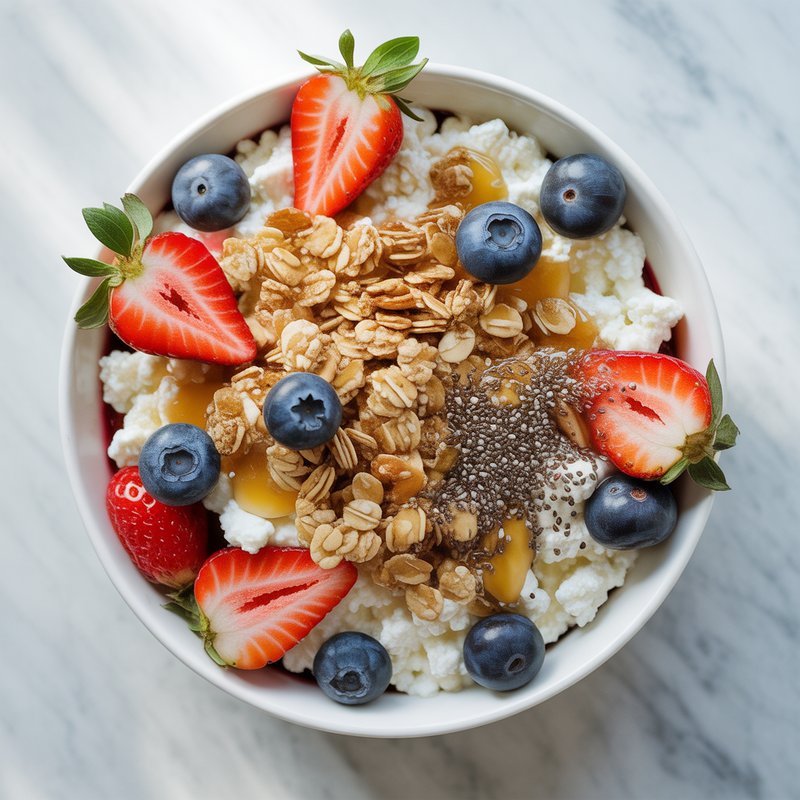
What usually goes wrong here is overbaking. Muffins in a dark tin can blow past done while you answer a text. Set a timer at 16 minutes and use a quick thermometer check. Travel morning you will be glad you did.
Texture tuning: dense and fudgy vs. lighter and cakier
Your preference matters. The base formula gives you a moist crumb that toasts cleanly and can take butter or peanut butter without crumbling. If you want denser slices that feel almost like banana blondies, reduce baking powder to 1 teaspoon, add 2 tablespoons almond flour, and pull at 200°F. If you want a lighter crumb, swap 1/2 cup of the all-purpose flour for cake flour and keep the full leavener.
Mixing influences texture, too. If you mix until perfectly smooth, gluten develops and the crumb tightens. Leaving a few streaks that disappear as you pour is a veteran move for tenderness.
Macros, storage, and real-world meal prep
Numbers will always depend on your exact brands. As a ballpark, using nonfat cottage cheese, two eggs, 70 grams brown sugar, 30 ml oil, 210 grams all-purpose flour, and no mix-ins:
- Per 10-slice loaf, you’re around 200 to 230 kcal per slice, 12 to 14 grams protein, 30 to 32 grams carbs, and 4 to 6 grams fat. Add a 30 gram scoop of whey isolate and you’ll gain roughly 4 to 5 grams protein per slice. Swap oil for 2 extra tablespoons cottage cheese to lower fat, and expect the crumb to be slightly chewier day two.
Storage: cool fully, then wrap in parchment and store in a large zip bag with a paper towel to catch condensation. Counter, 2 days; fridge, 5 days; freezer, 2 to 3 months. Slice before freezing. Reheat in a toaster at low to medium. Microwaving works in a pinch, 15 to 20 seconds per slice, but can toughen the edges if overdone.
Meal prep reality: I bake two loaves at once, rotate pans halfway through, and freeze one in halves. The second half comes out midweek. This keeps mornings frictionless and beats the 9 am scramble.
Flavor variations that keep weekly baking interesting
A single base can feel repetitive. Small tweaks give you new loaves without risky experiments.
- Espresso banana: dissolve 1 teaspoon instant espresso in the vanilla. Add dark chocolate chips. Coffee lifts banana like salt lifts caramel. Tahini-swirl: add 2 tablespoons tahini to the batter and dollop another tablespoon on top. Swirl with a knife. Reduce oil by 1 tablespoon to compensate for tahini fat. Cinnamon walnut: add 1 teaspoon ground cinnamon and 1/2 teaspoon cardamom. Toast the walnuts lightly before folding in. Spices lean toward breakfast loaf territory and smell fantastic. Blueberry banana: fold in 3/4 cup fresh blueberries tossed in 2 teaspoons flour. Bake slightly longer since berries add moisture. Your edges will caramelize, center stays jammy. Chocolate protein: replace 2 tablespoons flour with cocoa powder, use vanilla whey, and add 1 tablespoon extra milk. Cocoa dries batter; the extra liquid keeps the crumb tender.
Each variation changes moisture and sweetness a bit. The safe pattern is to adjust by small amounts: if a mix-in is wet, add a touch more oat; if a powder is dry, add a tablespoon of milk or yogurt.
Troubleshooting, candid and quick
If the loaf is gummy in the middle after cooling, ask three questions. Did you weigh the bananas, or were they oversized? Did you pull at temp? Did you puree the cottage cheese? Solutions: bake longer next time, tent earlier, and consider increasing oats by 1 tablespoon.
If the loaf is dry, especially at the edges, you likely overbaked by 10 minutes or used too much protein powder without extra liquid. Fix with a spoon of syrup brushed on the warm loaf and scale the protein powder down next round.
If it tastes “eggy,” you probably overmixed or baked too hot. Lower the rack position and check your oven calibration. Some ovens run 25°F hotter than set. An inexpensive oven thermometer saves a lot of grief.
If it sticks to the pan, parchment is the answer. Lining only the long side with a sling gives you clean release without wrestling.
If your loaf tunnels or has large holes, that’s usually from vigorous mixing or dumping leavener in one spot. Sift or whisk dry ingredients thoroughly, then fold, don’t beat.
Ingredient substitutions you can trust
Greek yogurt for cottage cheese: works, but the protein type shifts. Greek yogurt has more whey, which can yield a softer, slightly more custardy crumb. Go with 3/4 cup Greek yogurt and reduce banana by 2 tablespoons to keep water in check.
Honey for sugar: honey browns faster and adds water. Use 1/4 cup honey, reduce oil by 1 tablespoon, and check for color at 35 minutes. Tent early if needed.
Gluten-free blend: weigh it. Cup-for-cup blends vary in density. Start with 210 grams, add 1 tablespoon more liquid if batter feels pasty.
Oil vs. butter: butter tastes great, but its water content can tighten the crumb. Melted butter is fine; just keep the total fat at 2 to 3 tablespoons for balance.
Egg-free: this is the trickiest. Two flax eggs (2 tablespoons ground flax + 6 tablespoons water, rested) can work, but you lose some structure. Bump baking powder to 2 teaspoons and let the batter rest 10 minutes before baking. Expect a slightly denser slice.
The quiet performance details that matter
Prepare your pan and oven before mixing. Leaveners start working as soon as they meet moisture. A 10 minute delay because you forgot parchment costs you volume.
Room-temperature eggs mix in more evenly. Cold eggs can curdle fats and create uneven pockets.
Rapping the pan removes big air pockets that turn into tunnels. It’s a tiny step that improves the crumb.
A rest of 10 minutes before slicing makes a big difference. Thirty minutes is better. An hour is best. The loaf will still be warm and very sliceable.
Weighing beats measuring cups, especially for flour and banana. One person’s “packed cup” is another’s 30 percent error.
A final pass at the base recipe with thoughtful options
Ingredients:
- 360 to 400 grams ripe banana flesh 230 grams cottage cheese, blended smooth 2 large eggs 65 to 70 grams brown sugar 30 ml neutral oil or melted butter 1 teaspoon vanilla 210 grams all-purpose flour 30 grams rolled oats or oat flour 1 1/2 teaspoons baking powder 1/2 teaspoon baking soda 1/2 teaspoon fine salt Optional: 25 grams whey isolate, 60 grams walnuts or 80 grams chocolate chips
Method:
- Preheat oven to 350°F. Prepare a 9 x 5 pan with grease and a parchment sling. Blend bananas and cottage cheese until smooth. Add eggs, sugar, oil, and vanilla, pulse to combine. Whisk flour, oats, baking powder, baking soda, salt, and optional whey. Fold wet into dry. Add mix-ins if using. Batter should be thick and cohesive. Bake 55 to 65 minutes, tenting if needed. Pull at 200 to 205°F internal. Cool 10 minutes in pan, then fully on a rack. Slice after at least 1 hour.
If you follow that, you’ll get the loaf you want: familiar banana aroma, tender crumb, balanced sweetness, and real protein.
And when you cut that first slice on a weekday morning, smear it with almond butter, and realize you don’t need a second breakfast to feel steady until lunch, you’ll know the ratios did their job. That is the point. Not chasing novelty, just building a small, reliable anchor that fits a busy life and a protein target without feeling like a compromise.